DATE: 28TH MARCH 2026
Honourable Cabinet Ministers,
Honourable National Assembly Members,
Secretary to the Cabinet and Head of the Civil Service,
The World Bank Resident Representatives,
Senior Government Officials,
Governor of the North Bank Region,
District Chiefs,
Alkalolu and Religious Leaders,
Esteemed Development Partners,
Members of the Diplomatic Corps,
Community Leaders,
Ladies and Gentlemen,
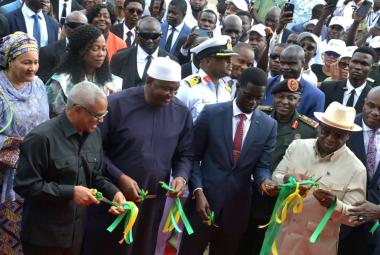
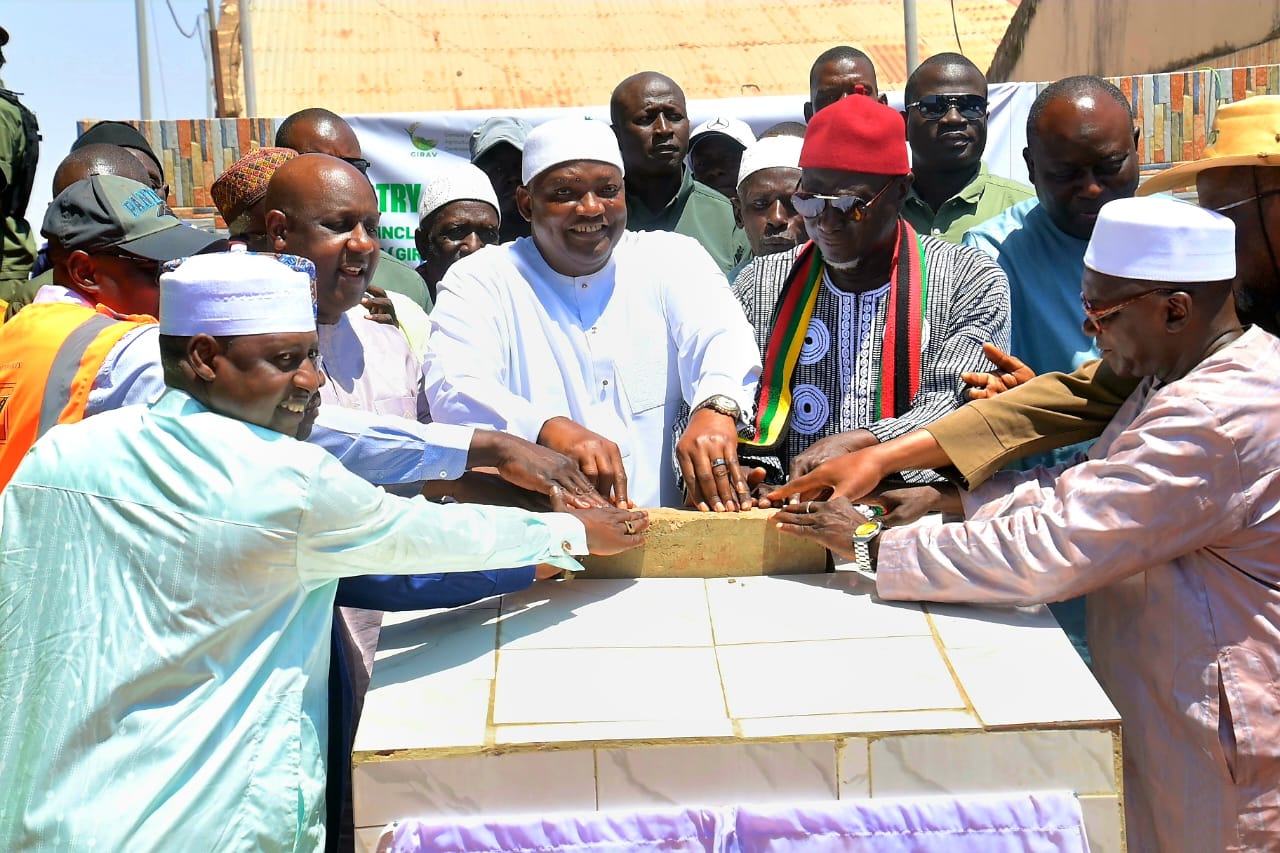
It is with great honour, pride, and a profound sense of national responsibility that I preside over the laying of the foundation stone for the construction of 204.7 kilometres of feeder roads under the Gambia Inclusive and Resilient Agricultural Value Chain Development Project (GIRAV).
Today’s ceremony is not merely a symbolic event but also a decisive step in advancing my government’s strategic vision for national transformation. It reflects our unwavering commitment to building a resilient, inclusive, and economically vibrant Gambia, as articulated in our National Development Plan and reinforced under the Green Recovery–Focused Development Agenda.
At the core of this initiative lies a clear and deliberate national priority: to ensure that every productive community in The Gambia is effectively connected to the primary road network. This is fundamental to unlocking the country’s economic potential, reducing inequality, and fostering national cohesion.
The feeder roads component we are launching today is, therefore, of critical strategic importance. It is designed to enhance rural connectivity by linking key agricultural production areas directly to major roads, markets, and essential social services. In doing so, it addresses one of the most persistent constraints to agricultural growth and rural development, which is limited access to good roads and services.
Distinguished Guests,
Agriculture remains the backbone of our economy and the primary source of livelihood for the majority of our population. Yet, for far too long, our farmers have faced significant challenges in transporting their produce to markets efficiently and competitively. These roads are intended to change that reality.
By facilitating the timely and cost-effective movement of agricultural produce, particularly horticulture, rice, and cashew, these feeder roads will significantly reduce post-harvest losses, improve supply chain efficiency, and enhance market access. This will not only increase farmers’ incomes but also strengthen the competitiveness of our agricultural value chains at both national and regional levels. In essence, these roads are economic corridors that will connect production to prosperity.
Equally important is that this investment advances our national objective of improving access to essential social services. For many rural communities, access to healthcare, education, and other basic services is often constrained by poor road conditions.
With the construction of these feeder roads, we are bringing services closer to the people, thus improving health outcomes, enhancing educational access, and strengthening human capital development. This is what inclusive development entails in practice.
Ladies and Gentlemen,
This initiative is fully aligned with my government’s broader infrastructure modernisation strategy, which prioritises integrated, climate-resilient, and growth-enabling investments. We are not only expanding our primary and secondary road networks; we are also ensuring that these networks are inclusive -reaching the last mile, where the impact on livelihoods is most profound.
The nationwide distribution of these feeder roads demonstrates our commitment to balanced regional development and equitable access to infrastructure. No region must be left behind and, no community must remain disconnected. In this regard, I am particularly pleased to highlight the scale of investment in the North Bank Region, where a total of 75.7 kilometres of feeder roads will be constructed across the districts of Lower Niumi, Jokadu, and Badibou.
This significant intervention will connect several key rural communities to the main road network, thereby improving mobility, facilitating the efficient transportation of agricultural produce, and enhancing access to markets and essential social services. Ultimately, this will contribute to increased productivity, strengthened value chains, and improved livelihoods for our people in the region.
Distinguished Guests,
Fellow Gambians,
This investment of US$25 million, fully financed by the World Bank under the GIRAV Project, is a powerful example of what strong partnerships can achieve.
We extend our deepest appreciation to the World Bank Group for its steadfast support and for complementing Government’s efforts to address critical infrastructure gaps and drive rural transformation.
The long-term impact of these feeder roads will be transformative. They will stimulate rural enterprise, enhance value addition, create jobs, and improve incomes across agricultural communities.
They will also strengthen food security, reduce our dependence on imports, and contribute to macroeconomic stability. Consequently, this is not just infrastructure development; it is also economic restructuring in progress.
Ladies and Gentlemen,
Today, we jointly laying stones and laying the foundation for opportunity, dignity, and shared prosperity.
We are also building roads that will carry the hopes of our farmers, the ambitions of our youth, and the future of our nation. In short, we are building a Gambia that is connected economically, socially, and geographically.
I thank you all for your attention.