DATE: 11TH MAY, 2026
Honourable Ministers,
Secretary to Cabinet and Head of the Civil Service,
Chief of Staff,
Madam Chairperson and Commissioners,
Secretary to the Commission,
Senior Public Officials,
Distinguished Guests,
Members of the Press,
Ladies and Gentlemen,
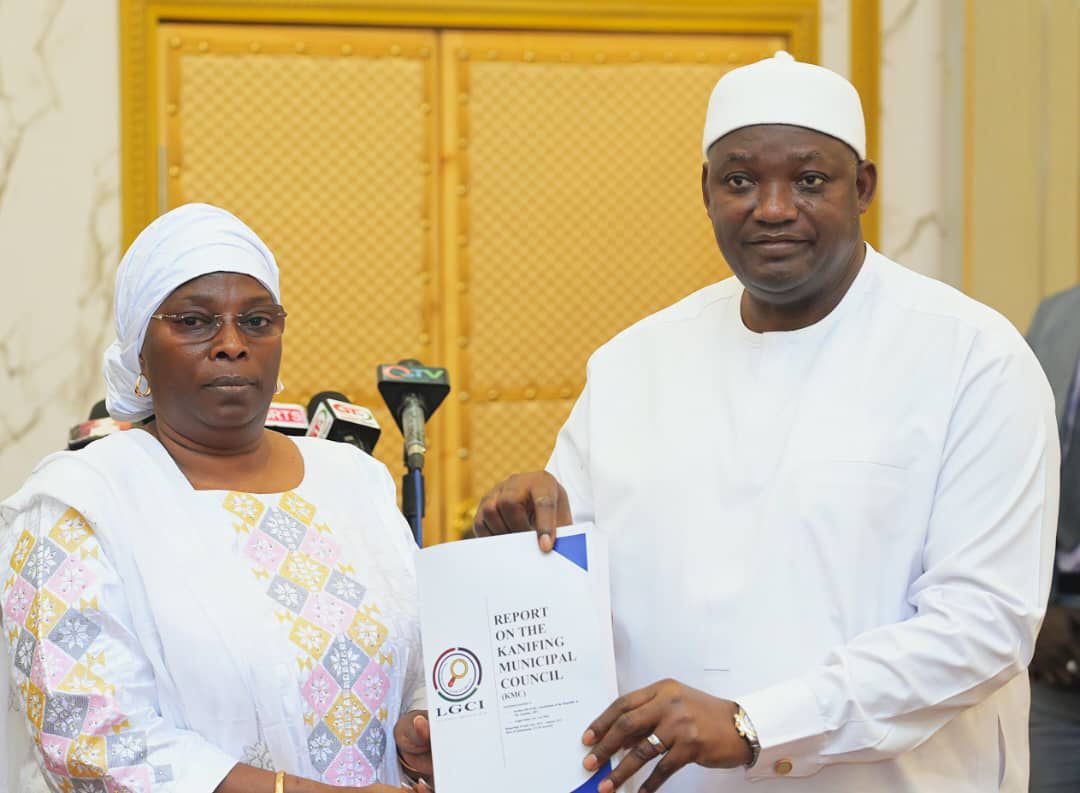
You will recall that, in February 2023, the Government established a Commission of Inquiry into the Conduct of Local Government Councils and Connected Matters, which began hearings in May 2023. We are here today to formally receive the Commission’s Report after three years of hard work.
On behalf of the Government and People of The Gambia, I express sincere appreciation to the Chairperson, Commissioners, Secretary to the Commission, support staff, witnesses, institutions, and everyone else who contributed to the successful completion of that critical national assignment.
The Commission had to undertake a heavy responsibility that required patience, skill, fairness, and commitment to public duty. In recognition of the diligence and independence with which they executed their mandate, we wholeheartedly congratulate and thank all of them.
Ladies and Gentlemen,
My administration established this Commission in line with its statutory oversight responsibility over Local Government Councils. Its purpose was to examine concerns relating to the financial and administrative operations of the Councils, strengthen governance, improve service delivery, support local government reform, and reinforce accountability at the decentralised level.
In particular, the inquiry is to help us strengthen our institutions and ensure that public servants manage public resources in accordance with the law and in the public interest.
As decentralised governance structures, the Local Government Councils are the closest administrative bodies to the people. They collect revenue, manage community facilities, support local development, and deliver services that affect the citizens directly.
It is essential, therefore, that they operate efficiently, transparently, professionally, and within the scope of the law. Following receipt of the Report today, the Government will study it carefully and responsibly. Through appropriate legal, administrative, and institutional channels, we will thoroughly and impartially review the Commission’s findings and recommendations. Then, Government will prepare and issue a White Paper outlining its position and the next steps and actions to take. I assure the Commission and the public that the Government will implement all recommendations accepted in the White Paper in accordance with the Constitution. This will include, but not limited to, pursuing reforms, where required; taking administrative action, where necessary; and following legal procedures to recover public funds, if recommended.
Let me clearly state that, in fulfilment of Government’s responsibilities, no person will suffer any unjust treatment. All persons affected by the recommendations of the Commission will have their rights to a fair hearing respected, and every action taken will be within the confines of the law.
Ladies and Gentlemen,
Accountability must be fair, objective, and guided by the principles of natural justice. Its objective is not simply to identify misconduct and shortcomings, but also to rectify them and prevent their recurrence.
In this circumstance, accountability mechanisms must work to correct weaknesses, strengthen institutions, curb systemic lapses, and build Councils that are more transparent, more efficient, and better able to serve the people.
Decentralisation of Local Government authority has to go hand in hand with accountability. Because Councils exist to serve their communities, they must act on their authority lawfully, fairly, and in the public interest.
It is obligatory for public officers to realise that public service is a trust, hence they must make sure that they properly record, protect, and rightfully use every Dalasi they collect in the name of the people. In like manner, the people should remember that, as citizens, they have the shared responsibility of ensuring accountability in public institutions. Thus, they must remain engaged, ask questions, follow local budgets, demand services, and participate constructively in local governance.
Madam Chairperson and Commissioners,
With the trust we have in the Commission, I am confident that your work will assist the Government in taking informed policy, legal, and administrative decisions.
We believe that your report will support our broader effort of strengthening local government administration, public finance management, procurement governance, internal audit, and decentralisation.
As I formally receive your report, I do so with the resolve that my government will responsibly and legally address the weaknesses and gaps you have been able to establish.
I urge our institutions to welcome the report and learn from the inquiry to strengthen our institutions, protect public resources, and reinforce public trust. Let the lessons learnt improve Local Government administration and support the decentralisation framework that our people deserve.
Commissioners, once more, we thank you for fulfilling your mandate successfully.
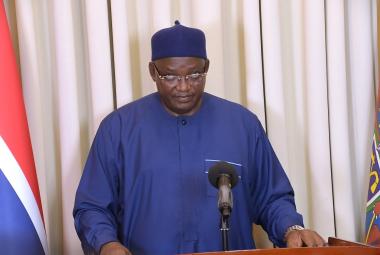
On behalf of the Gambian nation, I officially receive the Report of the Commission of Inquiry into Local Government Councils and Connected Matters.
Thank you all for your attention.