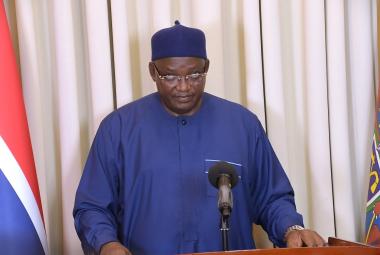
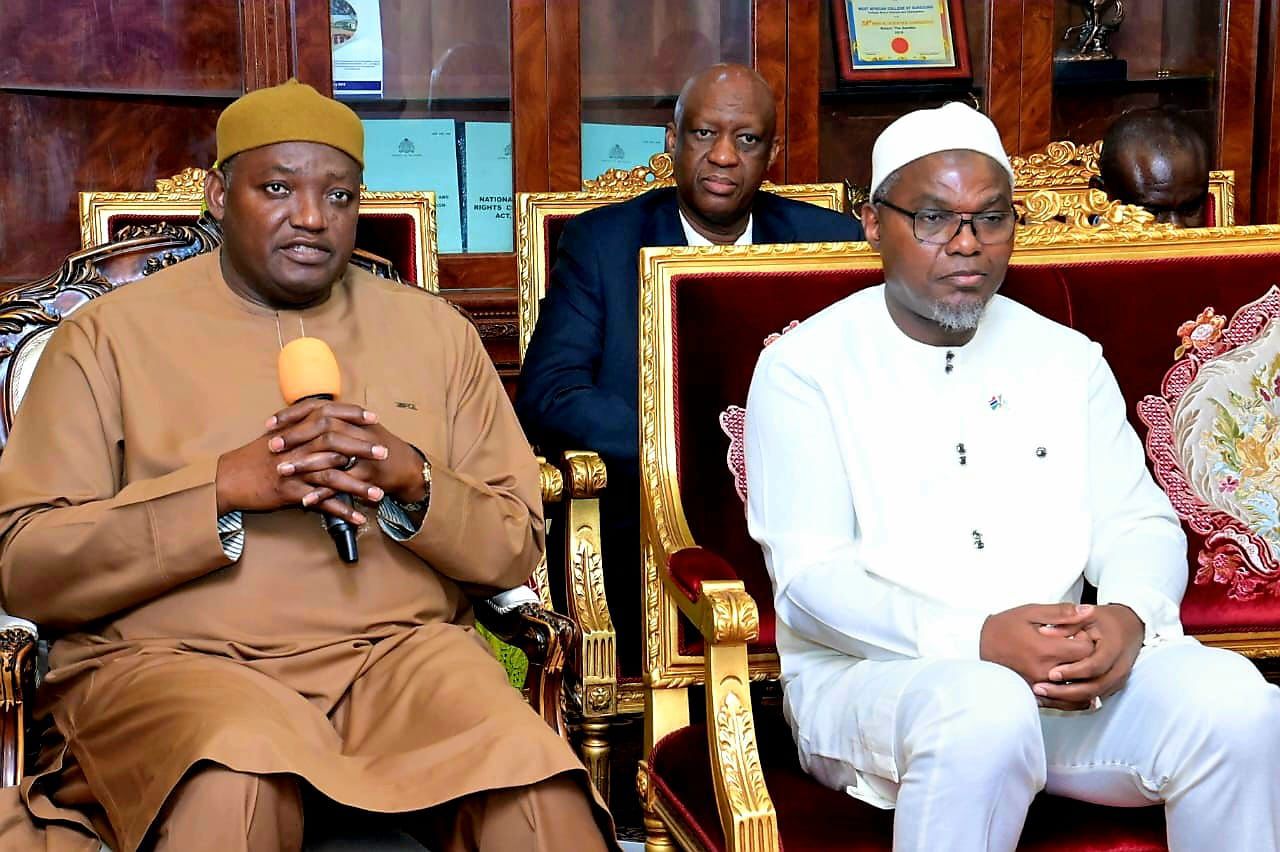
State House, Banjul, 15th March 2026: The first National Economic Council (NEC) meeting of 2026 held on Wednesday 11th March assessed progress on the state of the economy, implementation of policies to enhance accountability, increase efficiency and effectiveness.
The quarterly sector presentations update the President of the Republic of The Gambia, His Excellency Adama Barrow on progress during the reporting period, tease out implementation challenges, strengthen inter-sector collaboration, highlights policy clarity, inform decision making and provides expressed political will to march on.
CBG - Positive Outlook of Gambian Economy
The Central Bank of The Gambia (CBG) gave a positive assessment of the state of the economy, the global economic outlook, fiscal and monetary policy, the vibrant private sector and other economic indicators, despite recent geopolitical trade disruptions. The Gambian economy is on track to sustain the gains for economic growth. CBG reported that real Gross Domestic Product (GDP) has “consistently exceeded 5.0% since 2021,” providing focus through 2025 and 2026. The gains in the economy are ascribed to the strong public and private consumption and investments, alongside the resilience associated with financial services, telecoms, tourism and agriculture. The 6.4% inflation in January 2026 is an indication of the reduction which has also been reflected in the food prices during the period.
The bank is monitoring global uncertainties, trade disruptions and geopolitics and their impact on domestic inflation. The current account balance of the country improved in 2025 partly due to tourism, budget support and steady remittance inflows. It was observed that reduction in trade deficit, growth in service account and increased local income has contributed to 3.2% of GDP in 2025, compared to 4.4.% of GDP in 2024. Meanwhile, private remittance inflows have grown by 12.5% equating to over US$872 million in 2025.
Additionally, The Gambia’s international reserves increased to 4.4 months projected imports cover in February 2026, and the liquidity in domestic foreign exchange market maintained a stable Gambian Dalasi. The CBG observed, “the depreciation of the Dalasi against the CFA Franc and other currencies is primarily influenced by macroeconomic and structural factors, rather than a single transaction channel.” Domestic debt on the other hand has increased and debt servicing continues to rise in 2025.
MOFEA Reports on Non – Tax Revenue
The Ministry of Finance and Economic Affairs (MOFEA) reported that Ministries, Departments and Agencies (MDAs) collected D4.05 billion in Non-Taxed Revenue equating to 66% of the annual target, detailing the revenue collected from each MDA. The reasons that affected the collection in 2025 included the non-receipt of payments, delayed approvals, outstanding GSM operator payments, lack of digital payment systems limiting MDAs with weak management and recovery plans.
GRA - Domestic Revenue Increased
On domestic revenue collection, The Gambia Revenue Authority (GRA) mobilized over GMD25 billion, 10% above its target for 2025 and 21% growth from 2024. GRA approved target for 2026 is over GMD28 billion, an indication of the impact of digitalization in revenue collection in both customs and excise, and domestic taxes.
Meanwhile, the revenue authority is working on further strengthening its Revenue Assurance System, which is expected to come live later in the year. In other developments, GRA plans for 2026 include implementation of the Integrated Tax Administration System - ITAS and the Rental Compliance System projects.
Harmonizing Revenue collection Across MDAs
Digitalisation is enhancing financial governance and leading The Gambia towards a cashless society. The Accountant General’s Department (AGD) has collected closed to GMD2.5million for January and February 2026 as revenues from Basse and Fatoto bridges. In the government’s drive to have a prudent accounting mechanism connecting all revenue collecting points across MDAs, the AGD has advanced in the establishment of a GovPay Revenue Platform, designed to unify, control and monitor all public sector payments through a single integrated system. The platform will provide full revenue visibility and transparency, financial reporting, management and monitoring revenue performance greatly enhanced. The Accountant General remarked, “the aim is no government official handles cash.”
GIEPA - Increased Investment Opportunities
The Gambia Investment & Export Promotion Agency (GIEPA) reported processing investment applications included ten manufacturing, one agriculture, one fishery, one energy and three ‘other services’ projects with an estimated investment of USD204,673,795 have been received. When operational, close to five thousand jobs will be created. The projects include fifteen new Special Investment Certificates and one Export Processing Zone License. Meanwhile, new applications were being reviewed and MSMEs are being encouraged to take advantage of GIEPA’s services.
Trade Supports Local Industry
The Ministry of Trade, Industry, Regional Integration and Employment reported on the stock level of commodities and price stability as of the end of February 2026. Observations were that international commodity prices and average wholesale prices were stable, with reduction in the price of rice, edible oil, onions, potatoes and chicken saw a slight increase associated with the increased demand during the Holy Month of Ramadan. To support local producers, a moratorium on onion and potatoes imports was being enforced.
The Trade Ministry is also reviewing The Gambia Trade Policy as part of the transparency and predictability principles of the World Trade Organisation and in order to boost confidence in Foreign Direct Investment.
Agriculture – Boost for Agribusiness
In line with Government’s digitalisation drive, the Ministry of Agriculture is working on digitalizing its data system and improving on the use of technology in transforming from subsistence farming to agribusiness. Construction of agro-logistics centers in Wassa and Maka Farafenni have realized 60% progress and forty agri-business farms of five hectares for women and youths are situated country-wide.
Additionally, matching grants, 4000 smart water meters and over 200KM of feeder roads are all planned to make agribusiness a viable industry in the country. Projects for processing factories, cold storage facilities and land sites have been identified for development. Local production for school feeding, poultry, seed multiplication and enhance technology are contributing to food security and marketing.
MOTC - Tourist arrivals increased and expanded
Arrivals in tourism recorded some two hundred and thirty-three thousand and one hundred and thirteen (233,113) visitors in 2025. This represents 3% increase when compared to 2024 arrivals, making a significant boost in the domestic economy. The Ministry of Tourism, Arts and Culture 9MOTAC) is putting in place policies and strategies for The Gambia to regain its place as a leading tourism destination in West Africa. In addition to the increase in its traditional source, new sources are being explored including local tourism. The improved road networks, electricity and upcoming infrastructure in rural areas will further boost tourism. Meanwhile, efforts are underway to review policies, build capacity and modernise the industry and its related sectors.
The quarterly National Economic Council meeting was initiated to enhance governance and timely executive interventions, overcome process bottlenecks and ensure effectiveness and efficiency.